
In the early part of January of 2016, I had occasion to travel to delightful Burkina Faso in West Africa, located just below the Sahara desert and just above the equator. Long a bastion of peacefulness, stability, and welcoming generosity among it’s neighboring countries, Burkina went through an uncharacteristic stretch of political upheaval in the past 15 months. There was also the matter of the horrific terrorist attack aimed at ex-pats which occurred at a downtown Ouagadougou hotel the evening after we safely departed, which was orchestrated by outsiders. Yet, the predominant mood I encountered was one of strong positivity and sincere friendliness. The Burkinabé believe in the their future, are proud of their national demeanor, and have good reason to be. This is one of a series of reflections occasioned by my visit there.
Read Me…
Category / Agora
Nagel Summarizes Nagel
The subtitle of Thomas Nagel’s 2012 book, “Mind and Cosmos”, makes evident why it unleashed such a stir within the scientific and philosophical establishments: ‘Why the Materialist Neo-Darwinian Conception of Nature Is Almost Certainly False’. That’s two sacred cows skewered in one fell swoop, the first a kind of hidden dogma not generally exposed to the light of agoric day, and the second a beloved and enshrined foundational darling! What made things worse was that Nagel was/is a serious respected philosopher with decades of establishment credibility, including avowed atheism, prompting figures like Pinker and Dennett to publicly wonder what had gotten into their old colleague. Nagel’s book is not an easy read. You have to keep awake on every page, go slowly, and double back sometimes. Due to this and the ensuing ruckus, he offered a short clarifying summary of the book’s core thesis in a brief NY Times essay a year later, which is the subject of this current article.
Read Me…
Ouagadougou Journal 2: Tribalism
In the early part of January of 2016, I had occasion to travel to delightful Burkina Faso in West Africa, located just below the Sahara desert and just above the equator. Long a bastion of peacefulness, stability, and welcoming generosity among it’s neighboring countries, Burkina went through an uncharacteristic stretch of political upheaval in the past 15 months. There was also the matter of the horrific terrorist attack aimed at ex-pats which occurred at a downtown Ouagadougou hotel the evening after we safely departed, which was orchestrated by outsiders. Yet, the predominant mood I encountered was one of strong positivity and sincere friendliness. The Burkinabé believe in the their future, are proud of their national demeanor, and have good reason to be. This is one of a series of reflections occasioned by my visit there.
Read Me…
3 Approaches to Ethics
Increasingly, voices from many quarters wonder from where our ethical principles should and actually do arise. Recent speculations from psychologists like Johnathan Haidt and Steven Pinker direct attention towards ages of incremental evolutionary adaptive changes to explain our present collective social and even moral psyches. But the hyperbolized science vs. religion cultural battle, in concert with almost daily headlines depicting some new shocking conflict between personal decision and societal norm, signals the need for a wider re-examination of the roots of our ethics.
Read Me…
Heavenly Choreography
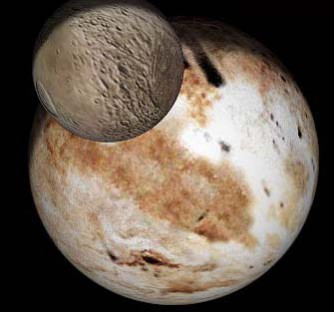
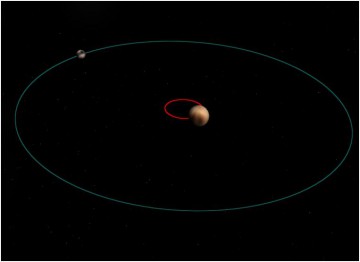
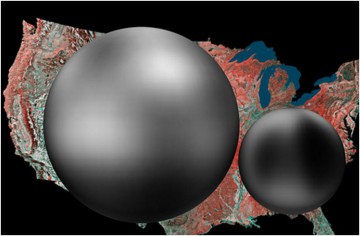
“Lonely” Pluto’s been in the news lately due to the fly-by of the U.S. New Horizons probe. Startling images and geological questions have arisen, and two new moons have been photographed. But what piqued my interest was the pronounced wobble in Pluto’s motion, not a new discovery, which has to do with both the proximity and similarity in mass of it’s largest moon Charon. This led to a general investigation into how and why bodies are influenced by each other in space, according to conventional physics.

Meditation on Chalk
There is a subtle distancing effect which our numerous online devices and other technologies foist upon our minds regarding the world of everyday objects. Left unchecked, we develop a disregard and disinterest in things and their nature, reflected in the disposable stance many ‘movers and shakers’ adopt towards articles of utility. But imagine if the surrounding world of objects could be reunited with their rightful depths of significance, qualities, and history! Suppose you had to think ONLY about a piece of chalk, to take a mundane example, for 10 full minutes. How difficult would it be, and what could be recovered?
Read Me…
 ||skirmishes|| ||with|| ||reality||