Unobvious Portal

_______RS

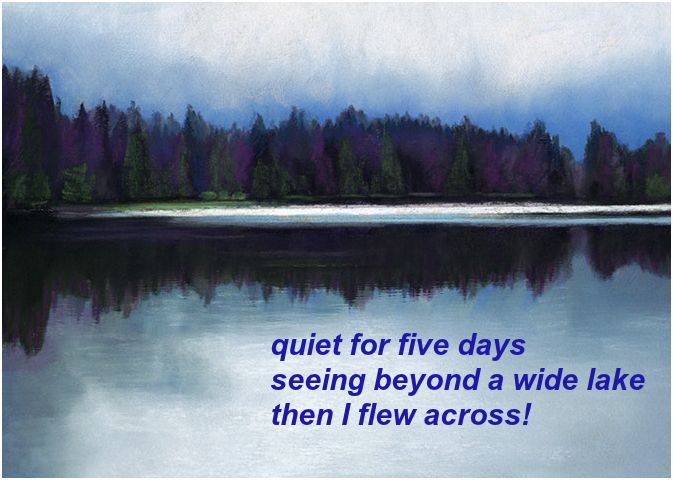
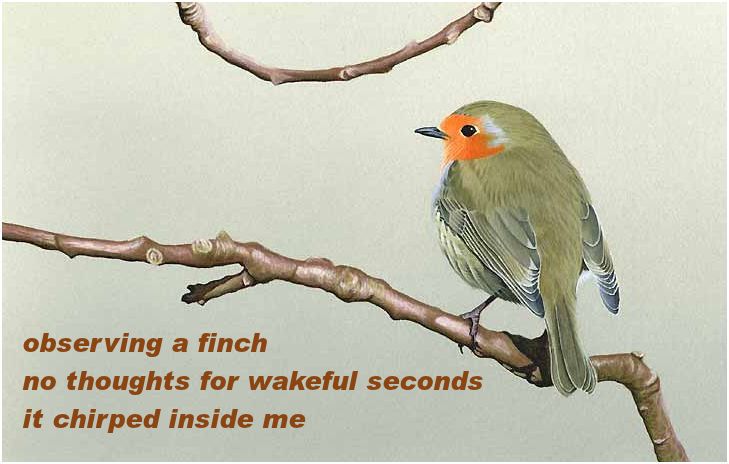
Notes: This haiku arose while reflecting upon and re-reading Gertrude Reif Hughes’ thoughtful and stimulating foreword to Rudolf Steiner’s monumental text “The Philosophy of Freedom” (sometimes translated as “The Philosophy of Spiritual Activity” — which gives an insight into the intended meaning of the term ‘freedom’). The book was written in 1893-1894 but the foreword was from a later edition, published in 1995. The book is very far from a typical philosophical work, which would turn many souls off, including myself in many ways. But if you pay it true and engaged attention — this book is still riveting and uniquely fresh. I have looked at it five or six times in life, always at least five or ten years apart, and it is every time a novel revelation. In contemplating the haiku, it is crucial to bear in mind that the act of noticing being referred to is realtime, in the moment! Not something realized a bit later, even a few seconds later, after the deed, relying upon memory.

You can use this INDEX to scan through all available ||SWR|| articles.

At The Tech Conference

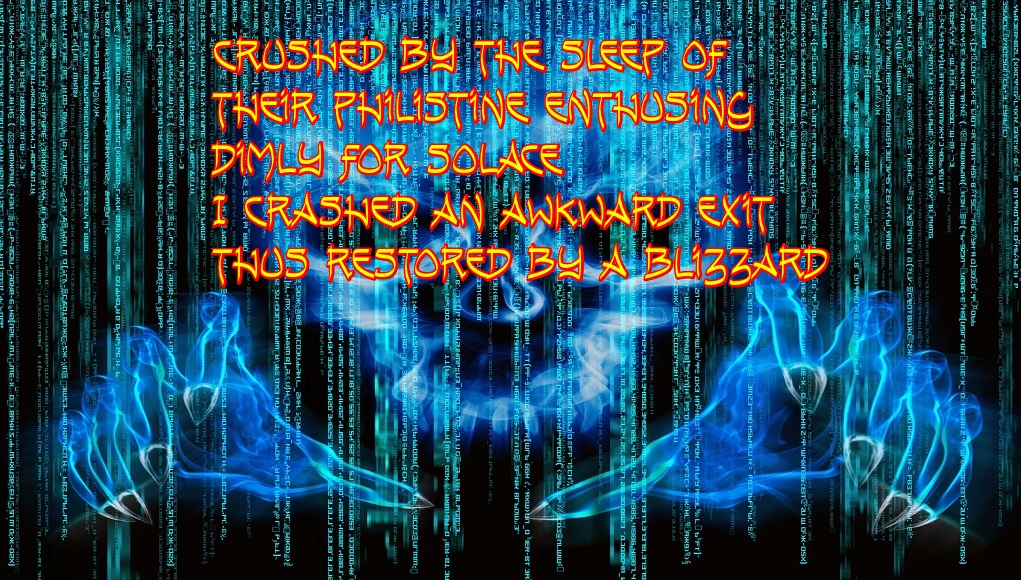
I first came upon Walt Whitman’s poem “Upon Hearing the Learn’d Astronomer” (have a listen) while pretty young, and was confused by it. I’d talked my parents into a cheap telescope for my 8th birthday… knew all the star names and where to find them (this was back when dark skies still existed). But by my university years I got it and was onboard with his sentiments. Here’s my parallel tribute around information technology. (Based on a true story.)

_______RS

[ Image Source (I superimposed the dayglow text) :]  (link)

Notes: A tanka is a Japanese short form akin to a haiku, but with a five line structure built of 5-7-5-7-7 syllables. There’s other rules too, which I generally ignore. You can hear a decent narration of Whitman’s brief poem here.

Handy INDEX — scan through all available ||SWR|| articles

tanka ’18 (at the tech conference)

_______RS

[ Image Source: ]  (link)

Note: A tanka is a Japanese short poem form akin to a haiku, but with a five line structure built of 5-7-5-7-7 syllables. The spirit of these sentiments were wonderfully anticipated by Walt Whitman in 1865 with his ‘When I Heard the Learn’d Astronomer’, though I consider the contemporary picture to be far more hellish. ( Whitman’s poem and a decent recitation ).

Handy INDEX — scan through all available ||SWR|| articles